
CITY BUS
TREAD
COMPOUND
The key characteristics of tread compounds for bus tires used on urban and interurban routes are all related to safety: traction and braking on all types of road surfaces and in all environmental conditions (heat, cold, water, snow, and ice), and resistance to thermal degradation caused by frequent stop-and-go driving.
Winter certifications (3PMSF) are essential for this type of tire; without them, usage is not permitted.
The range of compounds offered by Eurorubber makes it possible to pass the specific acceleration and braking tests on snow, carried out at certified testing centers.
The rolling resistance coefficient is the ratio between the force opposing rolling motion and the maximum load the tire can support. The higher this index, the greater the fuel consumption caused by the friction generated by the tire in contact with the road. This led to the creation of energy efficiency classes, from A (best) to F (worst), relating to the tire’s fuel consumption. This feature is included in the labeling regulation for new tires (EU1222/2009 and 740/2020), but it can also be measured on retreaded tires.
Eurorubber collaborates with manufacturers of both new and retreaded tires and has all the in-house know-how (compound effect + retreading process) required to offer a range of compounds for all positions and applications, also competitive in terms of rolling resistance.
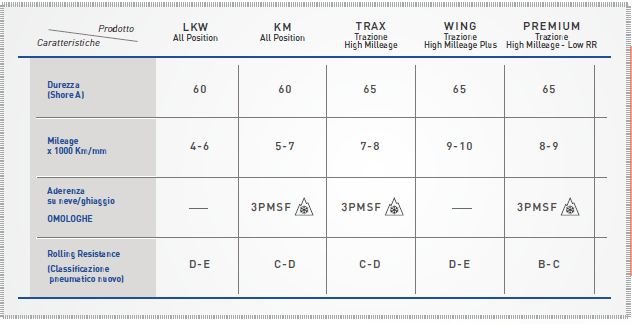
Our solutions are designed to ensure long-lasting durability, effectively resisting wear and mechanical stress, even in challenging operating conditions.
We offer products that guarantee consistent performance over time, providing our customers with the assurance that every application functions optimally, without surprises.
Our solutions optimize production efficiency and reduce operating costs, thanks to compounds and materials that combine high performance with a lower economic impact.
See also

Truck Tyre, Tread Compound DRIVE-TRACTION
DRIVE-TRACTIONTREAD COMPOUND The tread compounds of a traction tire must transmit motion and convert the engine axle rotations into the [...]

Truck Tyre, Tread Compound
TRUCK TYRETREAD COMPOUND The formulation and mixing quality of the tread compound determine truck tire performance: mileage, traction, tear resistance, [...]
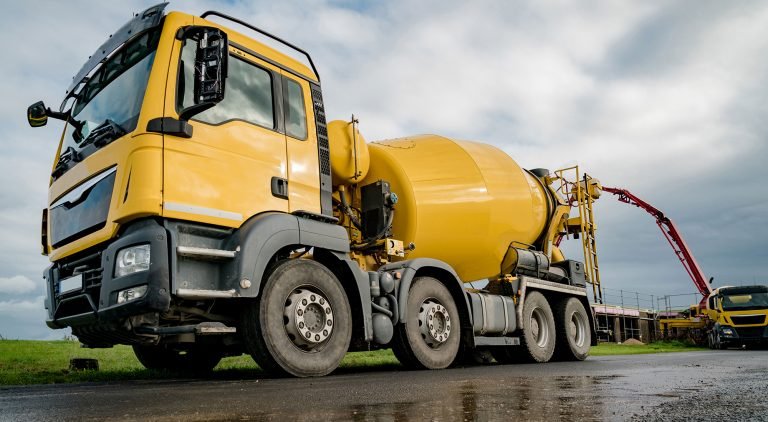
Truck Tyre, QUARRY CONSTRUCTION SITE – CONCRETE MIXER
QUARRY CONSTRUCTION SITE - CONCRETE MIXERTREAD COMPOUND The compounds for quarry construction site tires must allow the vehicle to achieve [...]
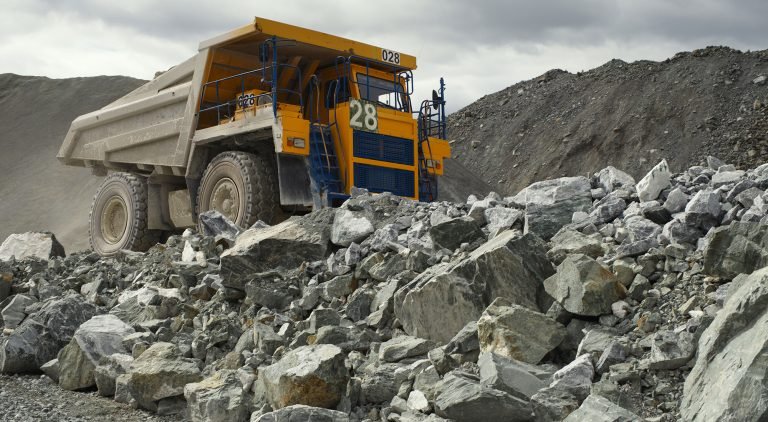
OTR TYRE – Earthmoving Compounds
OTR TYREEARTHMOVING COMPOUNDS Eurorubber has developed a highly competitive line of compounds for the earthmoving tire retreading sector. In order [...]