TECHNICAL COMPOUNDS
HNBR - Hydrogenated Nitrile Rubber
Description
Hydrogenated Nitrile Rubbers (HNBR)
Hardness Range
From 40 to 90 Shore A
Nitrosamine Free
Available on request
Transformation System
Injection / Compression / Extrusion
Vulcanization
Sulfur / Peroxide
Field of Application
Automotive / Oil industry (oil drilling) / Chemical sector / Cooling systems / Industrial sector (gaskets, oil seals, belts, pumps)
Main Reference Standards
Standards of major manufacturers / According to specification
TECHNICAL ARTICLE COMPOUNDS
HYDROGENATED NITRILE
RUBBER
Classification
Compounds based on hydrogenated nitrile elastomers allow the production of vulcanized products with specific and valuable properties, such as:
- Excellent mechanical properties
- High tensile and tear strenght
- Outstanding abrasion resistance
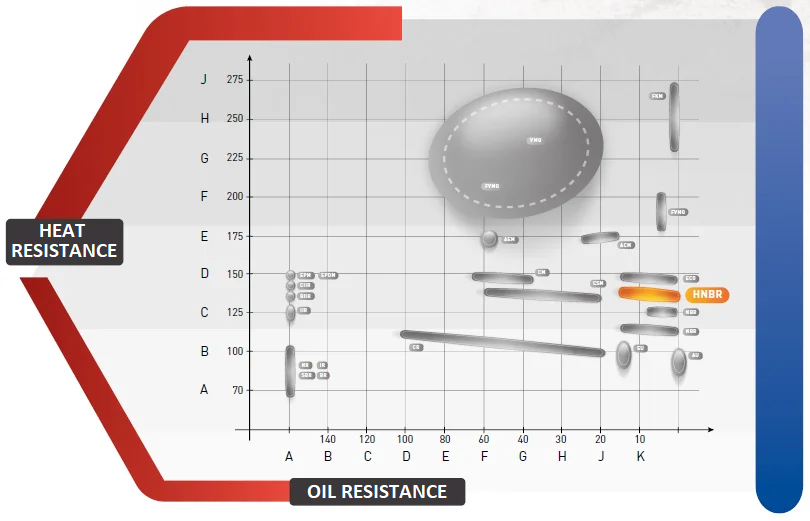
- Good heat resistance (up to 150°C) and good low-temperature flexibility
- Excellent resistance to ozone and weathering
- Good compression set
- Excellent resistance to lubricating oils, particularly those with amine-based additives
- Excellent resistance to coolants and other fluids used in cooling systems
Polymer Type
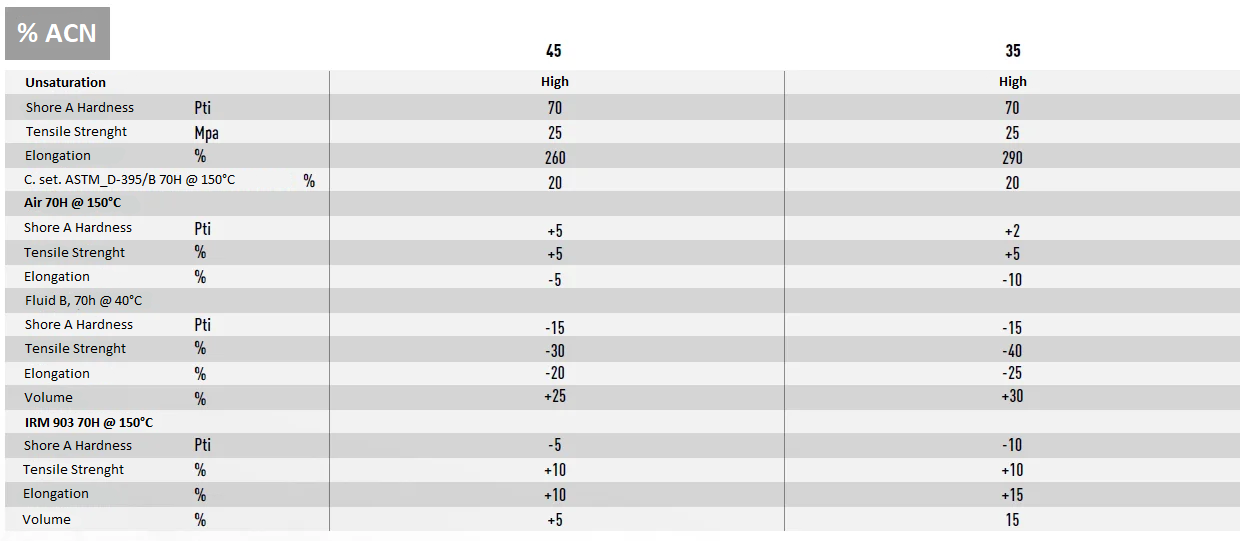
Hydrogenated nitrile rubbers (HNBR) are derived from standard NBR rubbers, with the residual double bonds in the butadiene portion being hydrogenated. Like standard NBR, these materials are available with varying acrylonitrile content (from 17% to 49%), but they differ in terms of their degree of unsaturation. The choice depends mainly on oil resistance and performance at low temperatures.
Applications
The excellent properties of these elastomers make them suitable for a wide range of applications requiring high mechanical strength, abrasion resistance, and chemical resistance. Common fields of application include:
- Oil drilling
- Static or dynamic seals for engine oils, brake systems, and air conditioning circuits
- Cables – pump impellers – drive belts – oil seals – gas seals
See also

SBR STYRENE-BUTADIENE RUBBER
TECHNICAL COMPOUNDSSBR - Styrene-Butadiene Rubber Description Styrene-Butadiene Hardness Range From 40 to 90 shore A Nitrosamine free Available on request [...]

NR NATURAL POLYISOPRENE RUBBER
TECHNICAL COMPOUNDSNR - Natural Polyisoprene Rubber Description Natural rubber Hardness Range From 30 to 90 shore A Nitrosamine Free Available [...]

NBR NITRILE RUBBERS
TECHNICAL COMPOUNDSNBR - Nitrile Rubbers Description Nitrile Rubber Hardness Range From 40 to 90 shore A Nitrosamine free Available on [...]

IIR BUTYL / HALO-BUTYL RUBBER
TECHNICAL COMPOUNDSIIR - Butyl / Halo-Butyl Rubber Description Butyl Rubber Hardness range From 50 to 70 shore A Nitrosamine free [...]