TECHNICAL COMPOUNDS
CSM - Chlorosulfonated Polyethylene Rubber
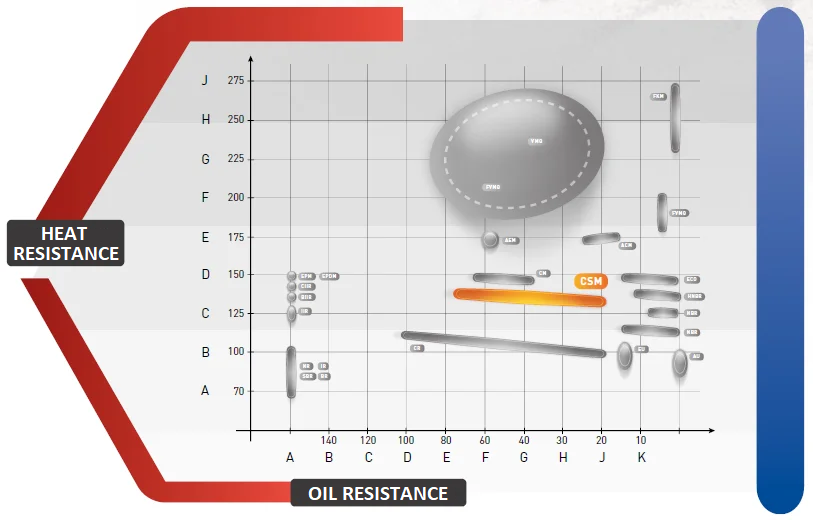
TECHNICAL ARTICLE COMPOUNDS
CHLOROSULFONATED POLYETHYLENE
RUBBER
Classification
11 Chlorosulfonated Polyethylene Rubber Hypalon•, introduced by DuPont in 1952, is an elastomer used in a wide range of applications thanks to its distinctive properties, such as:
- Good performance over a broad temperature range (from -40 to +135°C)
- Excellent mechanical properties
- Outstanding resistance to ozone and weathering
- Good chemical resistance, particularly to oxidizing and corrosive agents
- Low permeability to moisture and other vapors
- Excellent flame resistance
- Good dielectric properties
Polymer Type
CSM is derived from the chlorosulfonation of polyethylene. Crystalline polyethylene is made amorphous by introducing chlorine in varying amounts (25–45%). Vulcanization, which can be achieved using a wide range of systems, occurs due to the presence of small amounts of sulfonyl chloride groups or via reaction with the chlorinated alkyl structure.
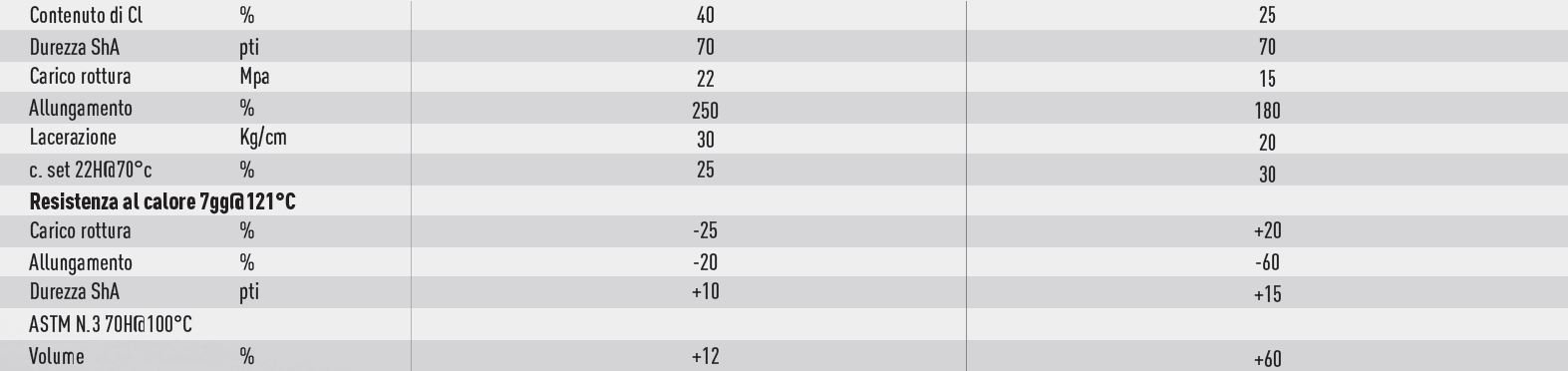
Different grades of the polymer are available, characterized by varying chlorine content. Physical-mechanical properties, compression set, chemical resistance, and low-temperature performance are influenced by the chlorine content.
Applications
Applications span across most industrial sectors, including the automotive, electrical, construction, and cable industries.
Common products include:
- Hoses for transporting inorganic chemical agents
- Insulating sheaths
- Waterproofing membranes for roofs, tanks, and basins
- Conveyor belts for mineral transport
- Colored profiles for construction (color stability over time)
- Rubberized fabrics
See also

SBR STYRENE-BUTADIENE RUBBER
TECHNICAL COMPOUNDSSBR - Styrene-Butadiene Rubber Description Styrene-Butadiene Hardness Range From 40 to 90 shore A Nitrosamine free Available on request [...]

NR NATURAL POLYISOPRENE RUBBER
TECHNICAL COMPOUNDSNR - Natural Polyisoprene Rubber Description Natural rubber Hardness Range From 30 to 90 shore A Nitrosamine Free Available [...]

NBR NITRILE RUBBERS
TECHNICAL COMPOUNDSNBR - Nitrile Rubbers Description Nitrile Rubber Hardness Range From 40 to 90 shore A Nitrosamine free Available on [...]

IIR BUTYL / HALO-BUTYL RUBBER
TECHNICAL COMPOUNDSIIR - Butyl / Halo-Butyl Rubber Description Butyl Rubber Hardness range From 50 to 70 shore A Nitrosamine free [...]