TECHNICAL COMPOUNDS
CR - Polychloroprene Rubber
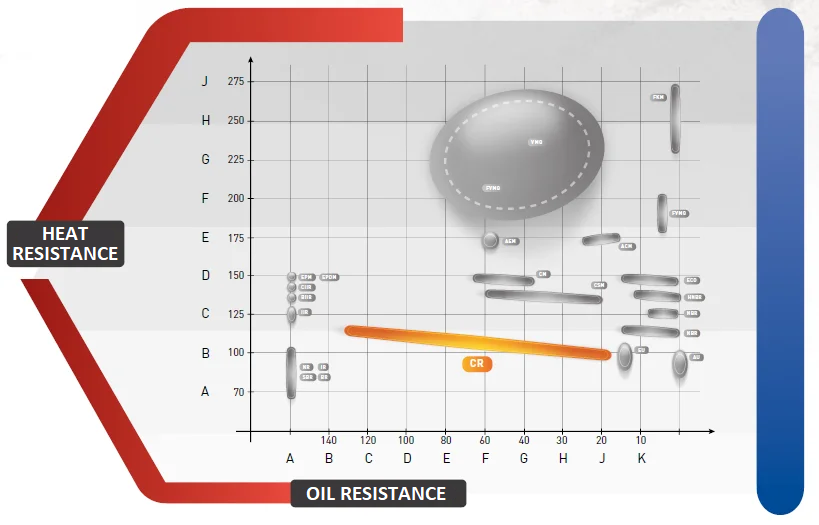
Description
Polychloroprene Rubber (CR)
Hardness Range
From 30 to 90 Shore A
Nitrosamine Free
Available on request
Transformation System
Injection / Compression / Extrusion
Vulcanization
Sulfur
Field of Application
Automotive / Home appliances / Conveyor belts / Printing rollers / Adhesives / Industrial applications
Main Reference Standards
Standards of major manufacturers / According to specification
TECHNICAL ARTICLE COMPOUNDS
POLYCHLOROPRENE
RUBBER
Classification
These elastomers are polymers based on 2-chlorobutadiene, with processability and performance characteristics that meet the majority of the rubber industry’s requirements. Products based on polychloroprene, properly compounded, stand out for their high resistance to weathering, ozone, flames, good aging resistance, moderate oil resistance, and good chemical inertness to many chemical agents. They feature excellent mechanical properties, good elastic behavior, low wear, and decent heat resistance.
Polymer Type
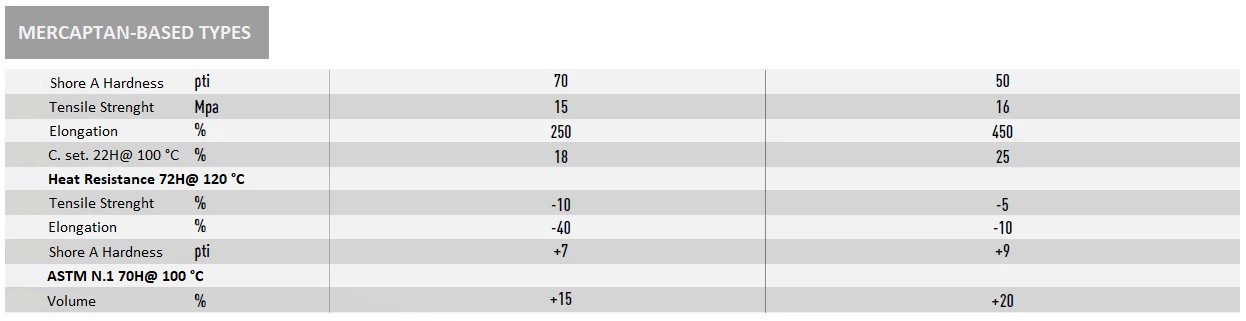
The available types primarily belong to two distinct families: sulfur-modified polymers and mercaptan-modified polymers. The key differences relate to their performance, particularly their mechanical properties and compression set.
Applications
Polychloroprene is often used as a substitute for natural rubber and styrene-butadiene rubber when their typical properties, such as:
- Ozone resistance
- Low flammability
- Moderate oil resistance
Specific fields of application include:
- Molding and extrusions for the automotive, chemical, mining, construction, and agricultural industries
- Printing cylinders and paper industry
- Cable sheaths
- Transmission belts for automobiles and industrial machinery
- Conveyor belts for construction and mining industries
- Rubber-coated fabrics
- Expanded rubber products
- Waterproof sheets
- Industrial footwear
- Adhesives
See also

SBR STYRENE-BUTADIENE RUBBER
TECHNICAL COMPOUNDSSBR - Styrene-Butadiene Rubber Description Styrene-Butadiene Hardness Range From 40 to 90 shore A Nitrosamine free Available on request [...]

NR NATURAL POLYISOPRENE RUBBER
TECHNICAL COMPOUNDSNR - Natural Polyisoprene Rubber Description Natural rubber Hardness Range From 30 to 90 shore A Nitrosamine Free Available [...]

NBR NITRILE RUBBERS
TECHNICAL COMPOUNDSNBR - Nitrile Rubbers Description Nitrile Rubber Hardness Range From 40 to 90 shore A Nitrosamine free Available on [...]

IIR BUTYL / HALO-BUTYL RUBBER
TECHNICAL COMPOUNDSIIR - Butyl / Halo-Butyl Rubber Description Butyl Rubber Hardness range From 50 to 70 shore A Nitrosamine free [...]