TECHNICAL COMPOUNDS
ACM - Acrylic Rubber
Description
Acrylic Rubbers (ACM)
Hardness Range
From 50 to 90 Shore A
Nitrosamine Free
Available on request
Transformation System
Molding, extrusion, calendering, with advanced techniques such as roto-cure and vulcanization in molten salts, hot air, or UHF
Vulcanization
Molten salts, hot air, UHF, roto-cure
Field of Application
Automotive industry, oil industry, industrial gaskets, engine components, extraction sector
Main Reference Standards
Standards of major manufacturers, according to specification
TECHNICAL ARTICLE COMPOUNDS
ACRYLIC
RUBBER
Classification
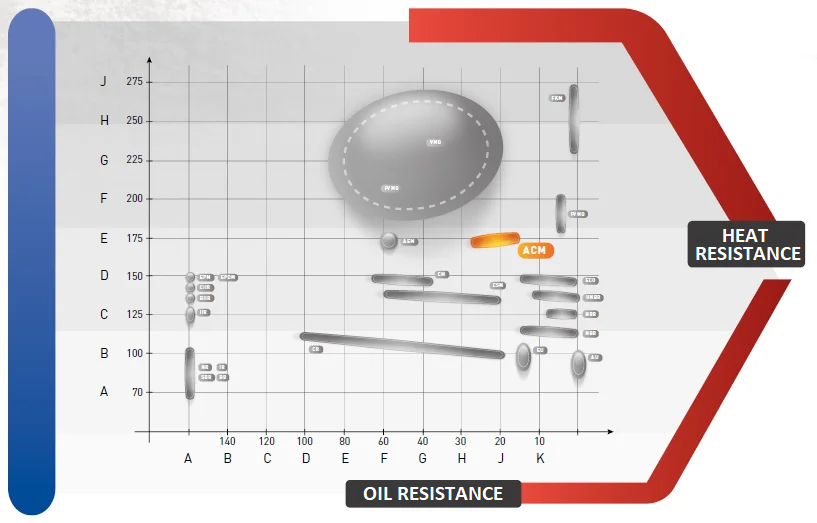
Polyacrylic Elastomers represent a class of polymeric materials with high performance in terms of:
- Heat resistance: they withstand operating temperatures up to 175°C, with peaks up to 200°C
- High resistance to lubricating oils
- Good sealing characteristics, low compression set values even at high temperatures
- Good ozone resistance
- Good electrical properties
Polymer Type
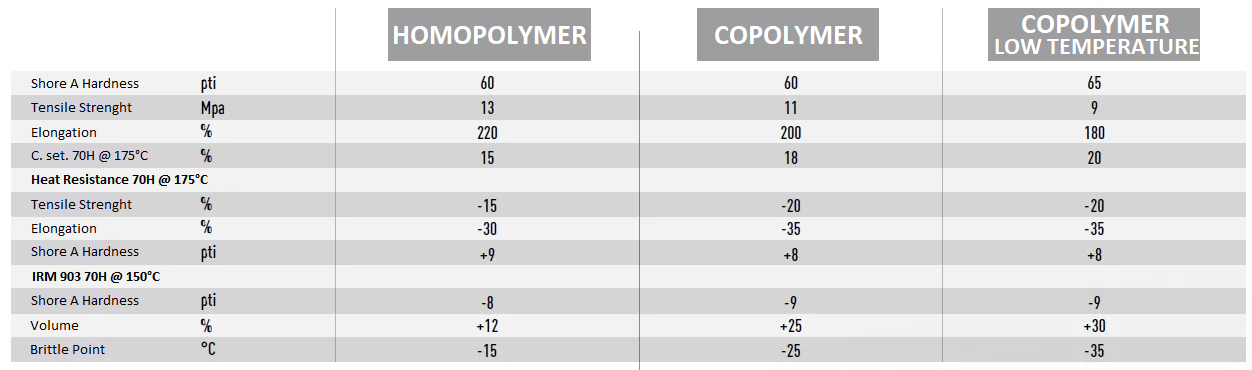
Polymer variants available on the market differ in resistance to oils and low temperatures. Within these two classes, there is further differentiation based on the “cure-sites” present in the polymer chain, which are chemical substitutes necessary for vulcanization. The two main families consist essentially of a homopolymer of ethyl acrylate and a copolymer of ethyl-butyl acrylate, which differs in its resistance to low temperatures. This characteristic is sometimes improved with the addition of special monomers. As with other types of elastomers, the rule applies to polyacrylic rubbers that improving performance at low temperatures leads to a deterioration in oil resistance.
Applications
In addition to classic molding technologies, given their numerous potential applications, these elastomers can be designed to be processed via extrusion or calendering with vulcanization in molten salts, hot air, or UHF. More sophisticated technologies, such as “roto-cure” or those involving the use of solutions, can be used with particular attention to the rheological characteristics and “shelf-life” of the compounds. The applications primarily concern the automotive sector and the oil extraction industry, such as:
- O-ring
- Cylinder head and oil pan seals
- Oil seal rings
- Valve guide seals
- Hoses
- Spark plug boots
See also

SBR STYRENE-BUTADIENE RUBBER
TECHNICAL COMPOUNDSSBR - Styrene-Butadiene Rubber Description Styrene-Butadiene Hardness Range From 40 to 90 shore A Nitrosamine free Available on request [...]

NR NATURAL POLYISOPRENE RUBBER
TECHNICAL COMPOUNDSNR - Natural Polyisoprene Rubber Description Natural rubber Hardness Range From 30 to 90 shore A Nitrosamine Free Available [...]

NBR NITRILE RUBBERS
TECHNICAL COMPOUNDSNBR - Nitrile Rubbers Description Nitrile Rubber Hardness Range From 40 to 90 shore A Nitrosamine free Available on [...]

IIR BUTYL / HALO-BUTYL RUBBER
TECHNICAL COMPOUNDSIIR - Butyl / Halo-Butyl Rubber Description Butyl Rubber Hardness range From 50 to 70 shore A Nitrosamine free [...]